Ividiyo is enterprise AI video surveillance for IP cameras — self-hosted, zero per-camera licensing. Built for scale.
The Platform
Live monitoring, AI detection, forensic search, and response, in one self-hosted system.
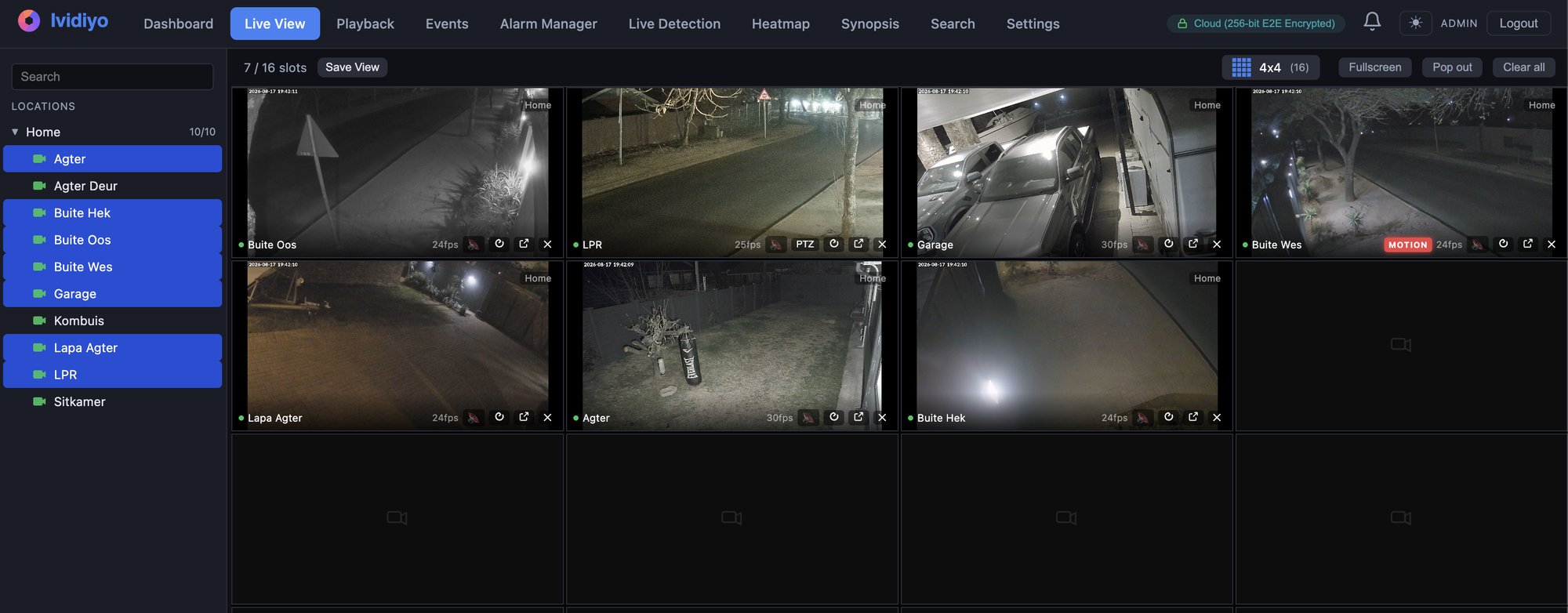
WebRTC streaming straight from your servers — no plugins, no lag. Grids up to 10×10, saved views, fullscreen walls, PTZ control, and instant motion badges.
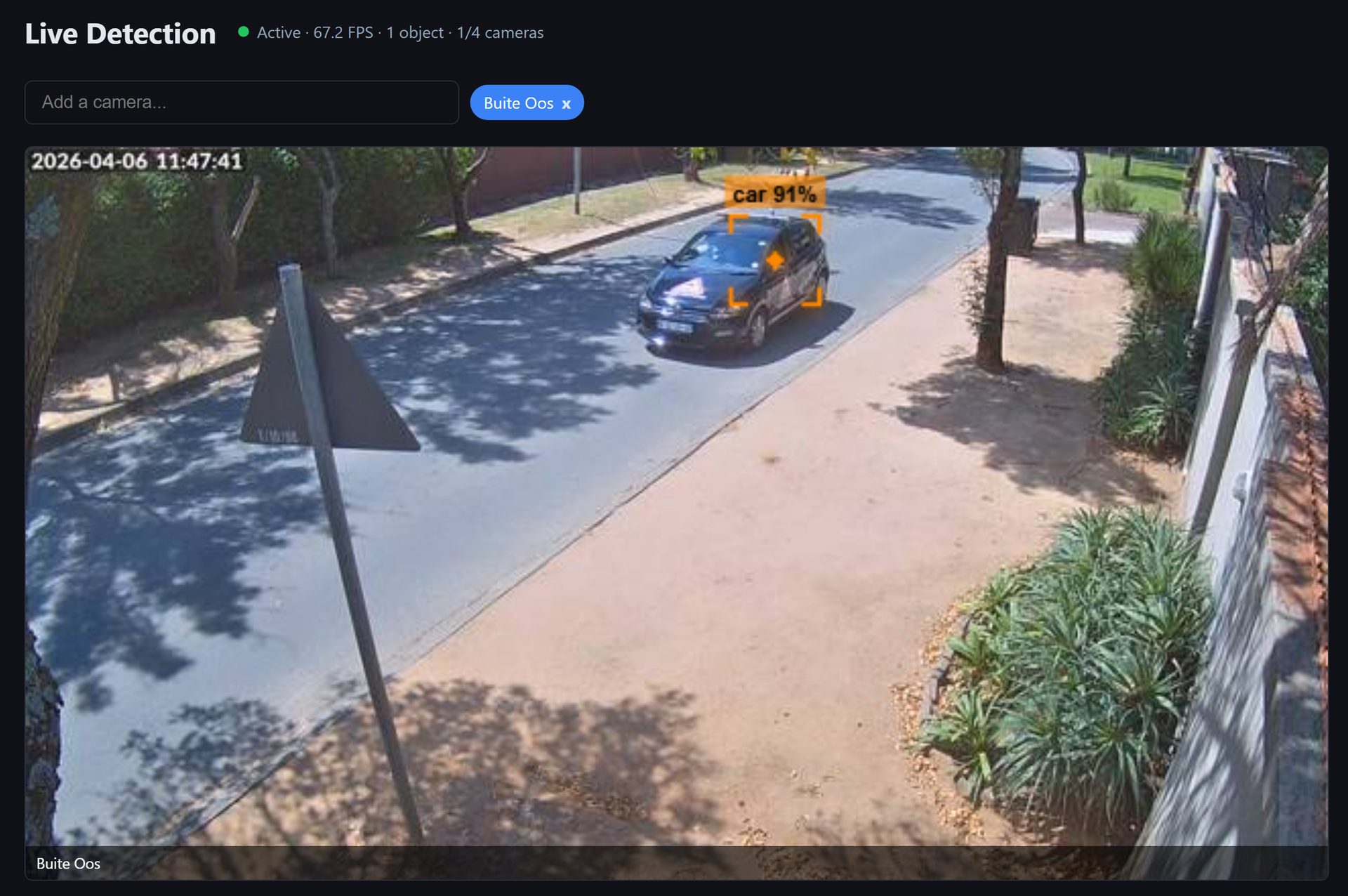
GPU-accelerated detection of people, vehicles, animals, and 80+ object classes — with per-zone class filtering so a delivery gate and a perimeter fence each watch for the right things.
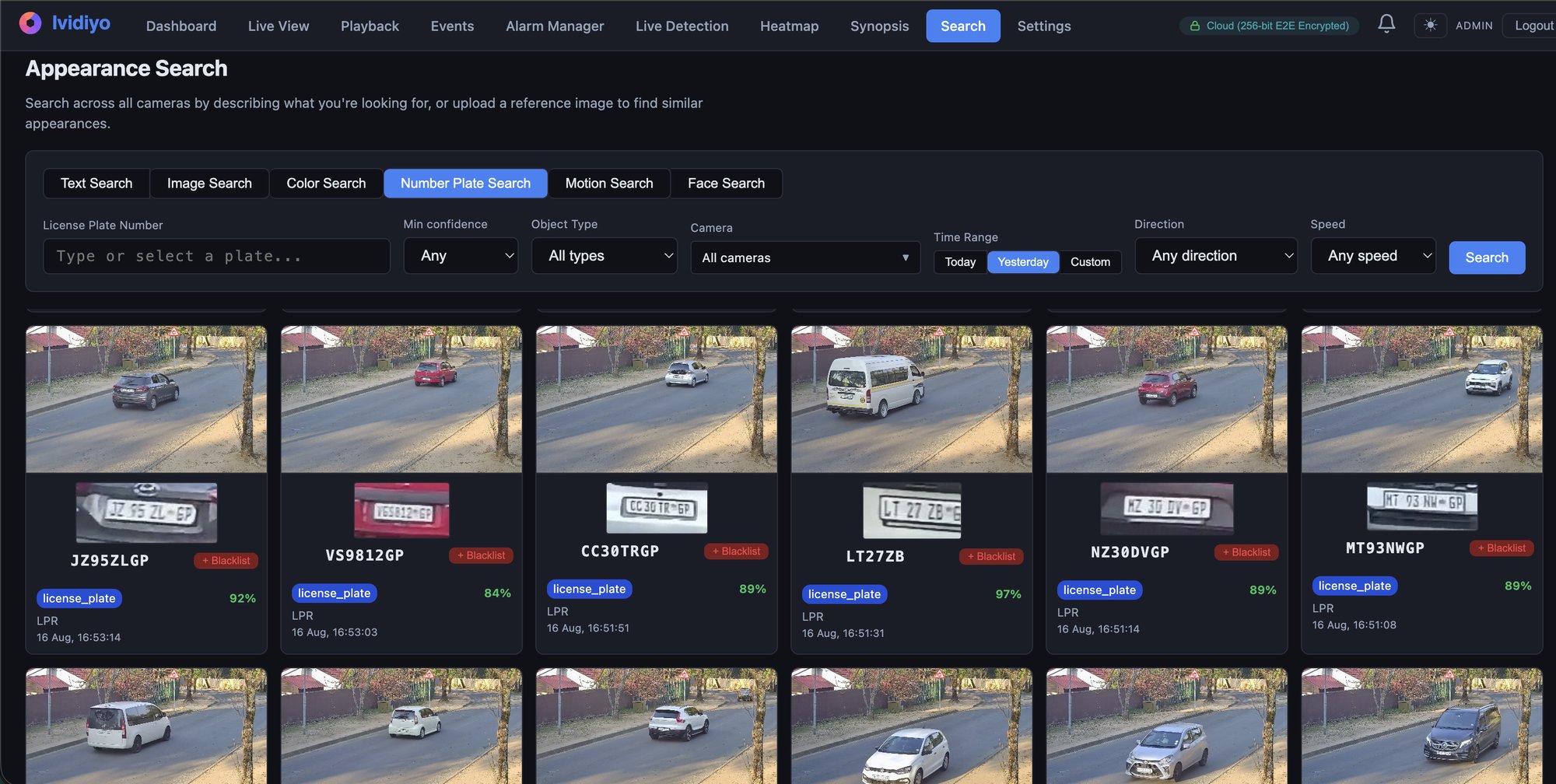
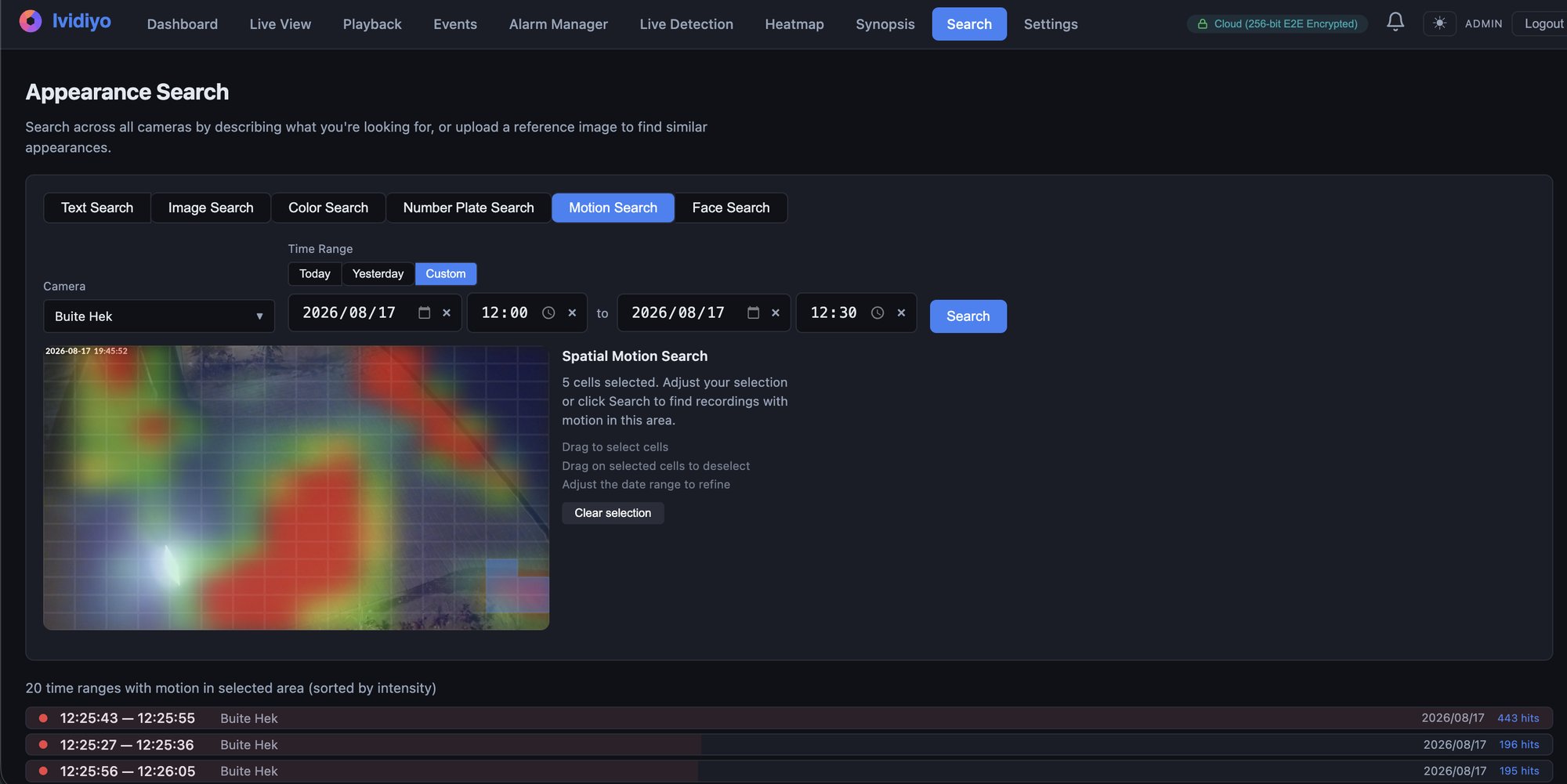
Six ways to search days of footage: describe what you're looking for in plain language, upload a reference photo, or search by plate, face, colour, or motion in a specific area of the frame.
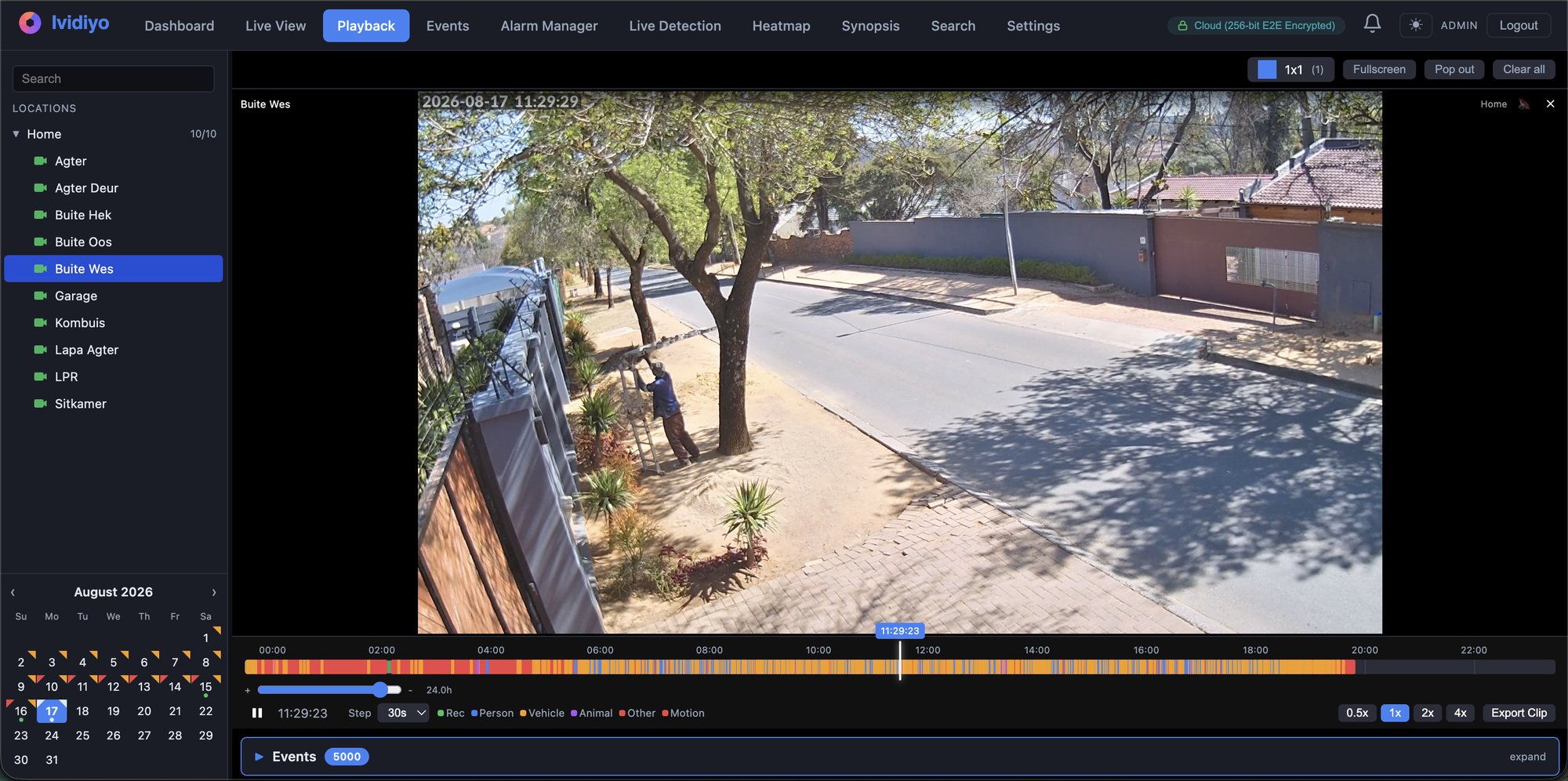
Scrub a colour-coded timeline where every person, vehicle, and motion event is marked. Jump to the moment, export the clip, and let the alarm manager walk your team through the response.
Capabilities
Feature availability depends on your plan; see pricing for what each tier includes.
Runs on your hardware
The same software scales from a single-board computer at home to multi-server estates — you only change the hardware.
Ideal for homes and small sites. A Pi 4 with a Coral USB accelerator is the floor; a Pi 5 with the Hailo AI HAT does more of it, faster. Either way the recordings need a real disk.
One off-the-shelf box runs recording, AI, and analytics for an entire property. An NVIDIA GPU powers the AI features — a single mid-range card handles every camera on site.
Recording servers scale horizontally under one management plane — add a server, assign cameras, done. Built for estates, campuses, and multi-branch operations.
Built for
Plate recognition at the gate, blacklist alerts before the boom lifts, perimeter zones that ignore wildlife but flag people — at 500-camera estate scale.
Key features: LPR + blacklist, electric fence integration, perimeter zones, alarm SOPs for the control room
After-hours intrusion alarms, activity heatmaps of customer flow, and instant forensic search when something goes missing — across every branch.
Key features: heatmaps, appearance search, multi-site console, role-based access
Track vehicles through the yard by plate, watch loading bays with delivery zones, and keep footage on-premises where your compliance team needs it.
Key features: number-plate search, PTZ control, delivery zones, self-hosted retention
A Raspberry Pi 5 with a Hailo AI HAT, recording to an NVMe or a USB drive, runs full AI detection for the whole property. Watch from your phone anywhere — footage never leaves your house.
Key features: Pi 5 support, iOS & Android apps, E2E-encrypted remote access, free tier
Perimeter
An electric fence tells a control room that a zone was disturbed. It cannot say whether that was a branch, an animal, the weather, or someone cutting through — so the client either rolls a vehicle on everything or quietly stops trusting the alarms. Ividiyo puts the camera covering that stretch of fence in front of the operator the moment the zone trips.
The energiser raises the alarm; Ividiyo opens the camera on that zone — live, and the seconds before it. Object detection tells a person from an animal, so the decision rule gets simple: a person on camera, send someone; nothing on camera, log it and look at it later.
Draw your fence line over an aerial image of the property and give each zone its cameras and its energiser. The zone flashes when it trips and opens the live view when you click it, and energiser state — armed, off, low voltage, alarm — reads straight off the map.
Every fence alarm carries an SOP checklist and escalation levels, so the operator is walked through the response and an alarm nobody acknowledges moves up the chain instead of ageing on a screen.
Works with the energiser you already have
Any energiser with a siren, strobe or alarm output will drive it, through a dry contact or relay input. Nothing proprietary on the fence side, no firmware to change, and no reason to replace a unit that is already in the ground. Tell us what you run and we will confirm the wiring for your panel before you commit.
Integrations
Ividiyo takes input from the rest of the site rather than replacing it. Anything that can close a contact, post to a URL or publish on a topic can raise an alarm here and cue the camera that covers it.
Where the integration already exists it is a configuration step, and using it costs nothing further: there is no add-on licence and no fee per integrated device, which is the part most vendors charge for. Where it does not exist yet we scope and quote it with the rest of the project — usually a short piece of work rather than a research exercise, because the connection is nearly always an API, a webhook or a contact closure.
Any ONVIF or RTSP camera, whatever the make. Autodiscovery, PTZ, presets and camera-side events come with them.
Multi-server recording with failover, tiered retention and a single console across every site.
Detection, classification and tracking run on your own GPU. Third-party analytics feed in as events over the API.
Plate reads from any camera, with watchlists, visitor management and searchable history.
Enrolment, search and alerts, running on your hardware alongside the rest of the detection pipeline.
Electric fence, beams and gate sensors raise a zone alarm with the camera covering that stretch already open.
Any panel that can close a contact or post to a URL raises an alarm here, with an SOP and escalation attached.
Dry contacts and relay modules in both directions: take a trigger in, drive an output on an event.
Two-way audio through the camera from the browser or the phone app, so an operator can challenge someone on site.
Uniview KB1100, USB joysticks through the browser, and keyboard shortcuts for operators who would rather not use a mouse.
Tiered storage pools across local disk, NAS and cloud mount points, with policy-driven movement between them.
ONVIF, RTSP, RTSPS, WebRTC, HLS, MQTT, REST and outbound webhooks, plus plain dry contacts.
Door and reader events linked to the camera on that door, with access history searchable beside the footage.
Panel events cue the cameras covering the zone and open the evacuation views on the wall.
Call events bring up the entrance camera and let the operator answer and see at the same time.
Plant and services alarms arrive as events with the relevant camera attached. Many reach us through Home Assistant today.
Temperature, water, power and air-quality sensors raise alarms with video context, via Home Assistant or the API.
Forward alarms to an existing control-room platform, or pull ours into it over the API.
Bay occupancy and barrier events tied to plate reads at the entrance and exit.
Weight tickets matched to the plate and the footage of the vehicle on the bridge.
Point-of-sale exceptions linked to the till camera, so a void or a refund has video against it.
Offloaded footage brought into the same timeline, search and evidence trail as the fixed cameras.
Analogue cameras brought in through any ONVIF or RTSP encoder, counted as ordinary channels.
Switch and link health raised as alarms beside camera and server health, via SNMP traps or the API.
Not on the list?
Ividiyo has a documented REST API, outbound webhooks, MQTT and plain dry-contact inputs, and a first-class Home Assistant integration that reaches a great deal more. Tell us what you run and we will tell you straight which of the three it is: already supported, a piece of development we will quote before you commit, or something we cannot do.
Camera support
Ividiyo speaks ONVIF and RTSP, so the camera is your choice rather than ours. There is no proprietary hardware to buy, no approved-vendor list to buy from, and no reason to replace cameras that are already on the wall and working.
Cameras from these manufacturers work with Ividiyo. The list is not exhaustive — if a camera is ONVIF or RTSP conformant it will run, whatever the badge on the front of it.
Running in production today
Axis, Dahua, Hikvision, Reolink, Ubiquiti UniFi and Uniview are all recording on live Ividiyo systems right now, alongside the rest. Send us a model number before you buy and we will confirm it — and if a camera turns out to need work, we would rather tell you that up front than after the invoice.
Getting started
No consultants, no certification courses. A guided installer takes you from bare hardware to live cameras.
Run the web installer on a Pi, workstation, or server. It sets up the database, services, and storage for you.
ONVIF autodiscovery finds cameras on your network — add them with a click, streams and recording start immediately.
Link your cloud account and open the mobile app — remote access connects end-to-end encrypted, no port forwarding.
Works with the cameras you already own
Any ONVIF or RTSP IP camera — Hikvision, Dahua, Uniview, Axis, UniFi, Reolink, and hundreds more. No proprietary hardware, no camera lock-in.
Privacy by architecture
Ividiyo is fully self-hosted: video is recorded, analysed, and stored on your own hardware. There is no cloud upload, no third-party processing, and no vendor with a copy of your footage.
All AI processing runs on your own servers. The system works fully offline — internet is optional, not required.
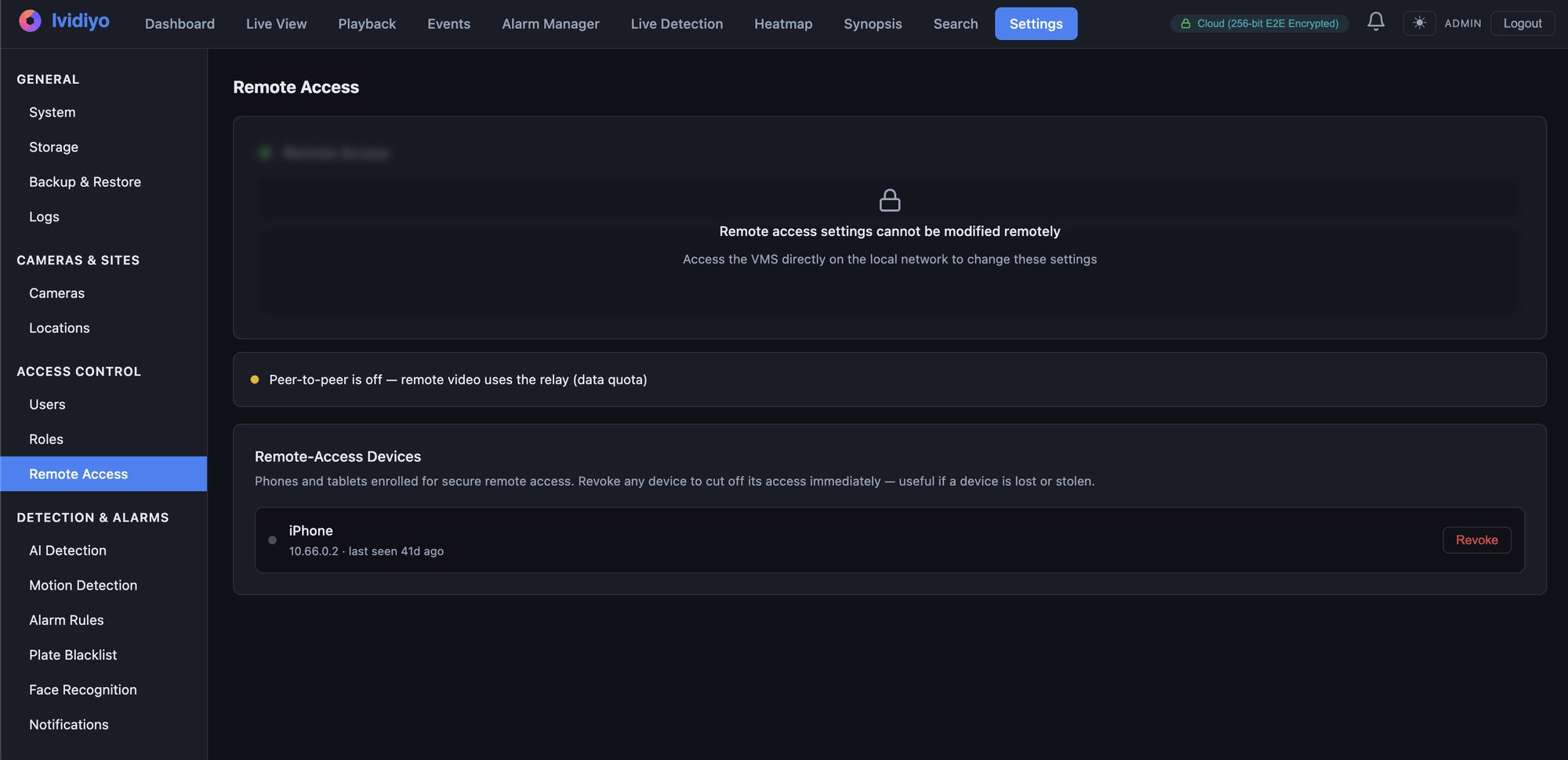
Remote viewing is end-to-end encrypted (256-bit) and connects peer-to-peer. Even our relay can't see your video.
Privacy-mask zones exclude neighbours and public space from recording, and role-based access controls who sees which cameras.
Why Ividiyo
What sets us apart from traditional monitoring vendors.
No per-camera fees. Annual or once-off perpetual licensing, priced by deployment size. Around 80% cheaper than the competition.
Proven in production across multiple sites with distributed recording servers. Scales to 500+ cameras and beyond.
Your data stays on your servers. Full control, no cloud dependency, no monthly subscriptions.
New — Ividiyo Mobile
Watch live, review footage, and stay on top of AI detections from anywhere — right from your phone.


Encrypted, peer-to-peer video straight to your phone — even on mobile data. No port-forwarding, and an automatic secure relay when a direct link isn’t possible.
See every person, vehicle and detection as it happens, grouped by day. Tap any event to jump straight to the recording of that moment.
Scrub a smooth timeline, filter events by type, and pinch-to-zoom event images to catch the detail that matters.
Available on iPhone and Android. Your footage stays on your own servers.
Smart home ready
Install the Ividiyo integration from HACS and every camera, motion sensor, and AI detection becomes a Home Assistant entity — ready for dashboards and automations.
Live camera feeds and snapshots as native entities
Motion and zone-occupancy binary sensors per camera
AI detection and licence-plate events for automations — open the gate on a known plate
Custom Lovelace cards: camera wall, event feed, and status bar
Browse and play event clips in the HA media browser
PTZ, clip export, and alarm acknowledge as HA services
See it in action
Real screenshots from a live 160-camera deployment.
Live View — multi-camera grid with WebRTC streaming
AI Detection — real-time object detection with bounding boxes
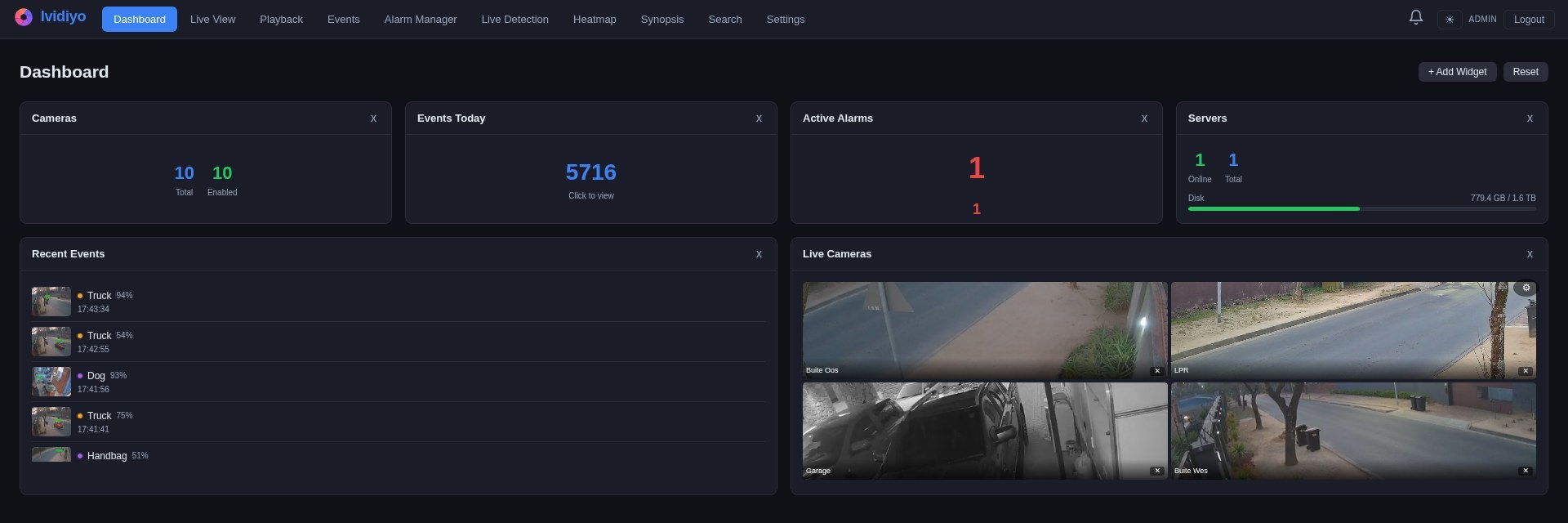
Dashboard — customisable widgets with live stats
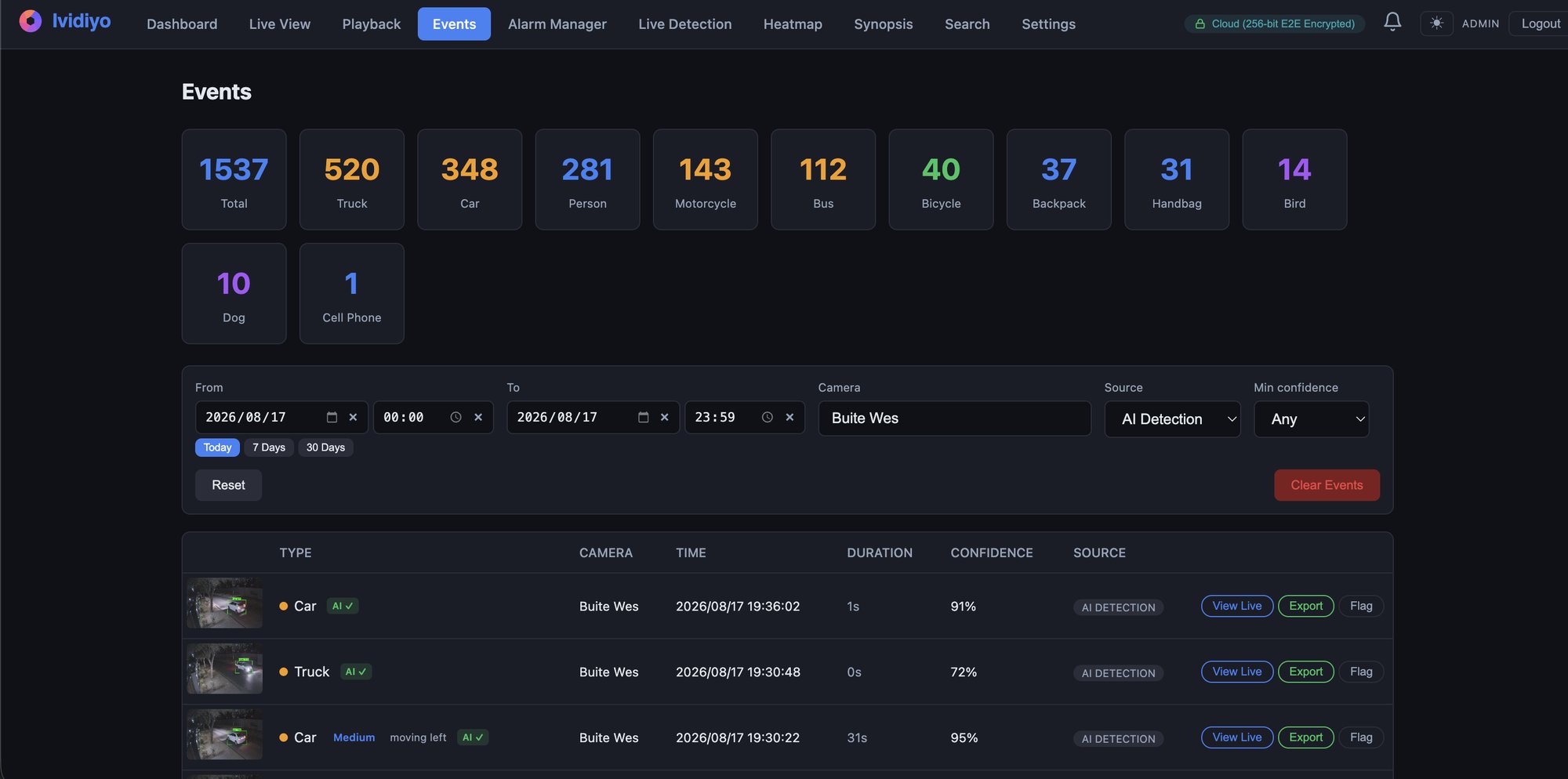
Events — AI-detected event log with thumbnails and filtering
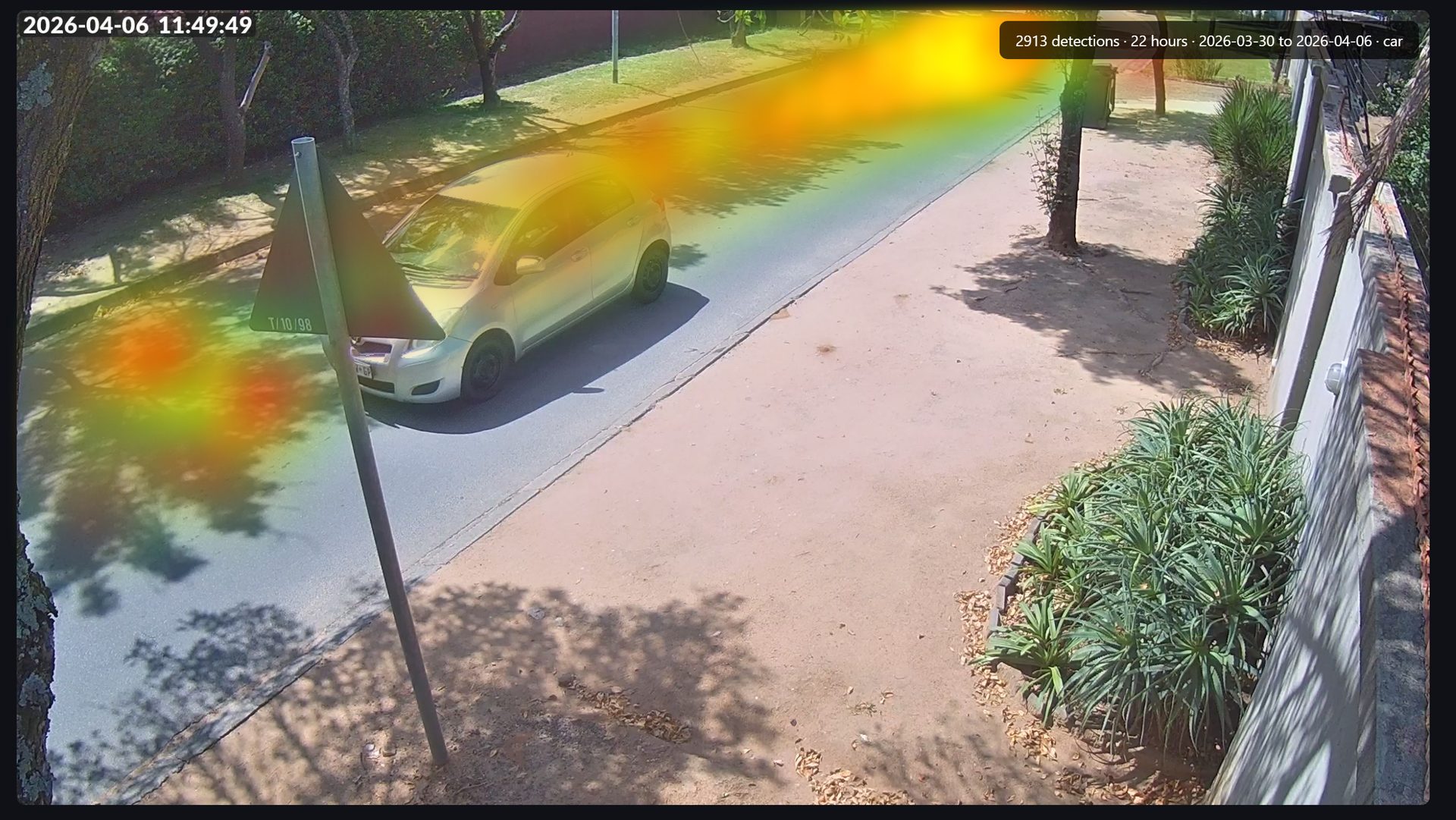
Heatmap — per-class activity analytics overlay
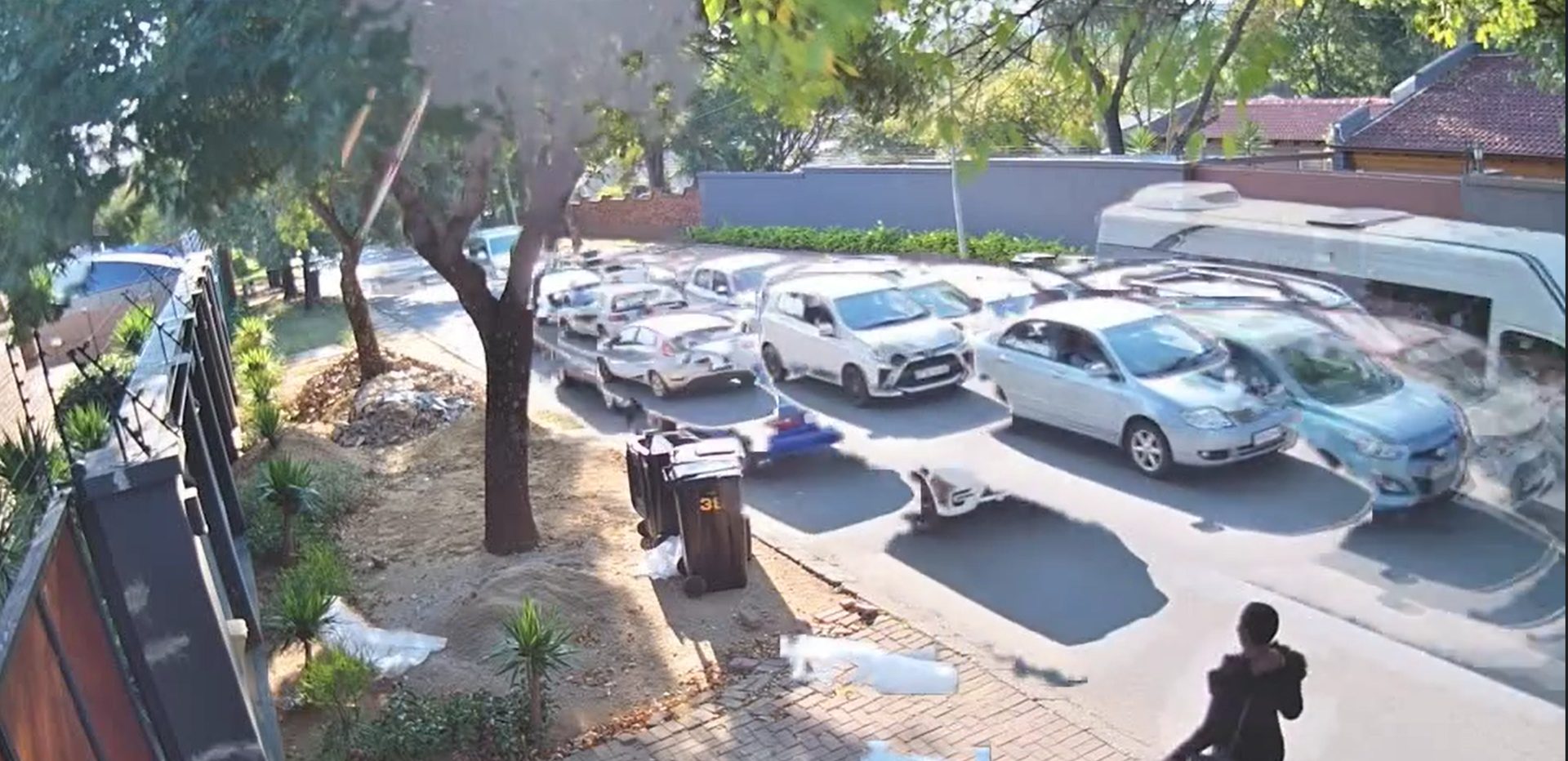
Video Synopsis — hours of footage condensed into minutes
Motion Search — draw an area, find every movement in it
Remote Access — E2E-encrypted, with per-device revocation
Pricing
No per-camera fees. Every AI module — object detection, plate recognition, appearance search, anonymisation and face recognition — is included in Professional and Enterprise, not sold as an extra. All prices are in South African rand and include VAT — what you see is what you pay.
PTZ and CCTV keyboard control, interactive maps, forensic search with colour filtering, camera tamper and lens checks and the REST API — on top of everything in Home, at the camera counts below.
| Cameras | Annual licence | Perpetual (once-off) | Ividiyo Care/yr | Premium 24/7/yr, per site |
|---|---|---|---|---|
| Up to 32 | R6,900 | R17,250 | R3,450 | — |
| Up to 64 | R11,900 | R29,750 | R5,950 | R15,000 |
| Up to 128 | R19,900 | R49,750 | R9,950 | R15,000 |
| Up to 200 | R27,900 | R69,750 | R13,950 | R18,000 |
Multi-server distributed recording, federated multi-site and automatic server failover — plus evidence management with a chain-of-custody audit trail, SSO and Active Directory, white-label, custom development and on-site installation, on top of everything in Professional.
Annual licences include updates and business-hours support. Nothing else to buy. Every price on this page is VAT inclusive.
Perpetual is a once-off licence, available on Professional and Enterprise. Free and Home stay free and annual.
Ividiyo Care keeps updates and support running on a perpetual licence, at 20% of the perpetual price a year. It works out to half the annual licence, so perpetual plus Care breaks even with annual in year five and costs less every year after that.
Premium 24/7 is remote support around the clock with a one-hour response on critical faults, priced per site on Professional and per server on Enterprise — so a minimum of R36,000 on Enterprise. On-site callouts are billed separately at after-hours rates. Professional up to 32 cameras is business-hours support only; every other tier can add it.
Included
These used to be paid add-ons. They are now part of Professional and Enterprise. “Module” means our own software, below — integration work against third-party hardware is scoped and quoted with the project. Every AI capability is still off by default and switched on per camera by you, and Ividiyo is fully self-hosted — all processing runs on your own hardware, and no video ever leaves your premises.
People, vehicles and 80+ classes on your own GPU. Per-zone class filtering, heatmaps and live overlay when you enable it.
Read plates from any camera. Watchlist matching, visitor management, stolen vehicle database integration.
Search your own recordings in plain language — “white truck” — instead of scrubbing hours of footage.
Face and plate redaction for POPIA and GDPR. Export anonymised clips for third parties.
Door-camera linking, access events and mustering, built against your controller as part of the project. Ask us about yours.
Enrolment, search and alerts, running on your hardware alongside the rest of the detection pipeline.
Comparison
300 cameras with AI detection and plate recognition
Taking this to a budget meeting? Download the product brochure (PDF) — every tier, the comparison table and the 2,500-camera arithmetic, in four pages.
Competitor figures are converted from published USD list prices at R16.54 to the dollar, October 2026, before tax — the Ividiyo figure includes VAT, so the real gap is wider than it looks. Perpetual licensing brings the Ividiyo figure to R299,500 once off, with Ividiyo Care at R59,900 a year.
Switching
Keep the cameras on the wall and change the software underneath them. Any camera that speaks ONVIF or RTSP carries across, so the switches, cabling and storage stay exactly as they are. Side-by-side comparisons you can check against each vendor's own published material.
A device licence per camera, Care Plus on top, Windows Server underneath and analytics sold separately. Where the money goes, and what carries over.
Read the comparison →Linux-native and well built, so the difference is not the operating system. It is per-camera licences, AI priced per device, and a desktop client to deploy.
Read the comparison →Windows-only, one PC, one cheap licence — genuinely hard to beat at four cameras. Where it stops, and what to move to when it does.
Read the comparison →Also South African, also runs on Ubuntu, thirty years of installed base. The narrowest comparison here, and the one we were most careful writing.
Read the comparison →Free, open source and genuinely good, so there is no price argument to make. This one is about the day a single node stops being enough.
Read the comparison →See all VMS alternatives, or read about running it self-hosted on Ubuntu. Or take it with you — the brochure (PDF) carries all five comparisons.
Trusted by
We evaluated Milestone and several other platforms before choosing Ividiyo. The cost difference was staggering — we deployed 350 cameras with AI detection across our infrastructure for a fraction of what a single competitor quoted us for cameras alone. The system has been running in production for months without a hiccup, and the AI detection picks up things our operators would have missed. It's not just a budget alternative — it genuinely outperforms what we had before.
In mining, downtime means lost production. We needed a surveillance system that could handle harsh environments across multiple shafts and surface operations — over 500 cameras, and it had to be reliable. Ividiyo gave us the scale without the licensing nightmare. The AI detection has already caught unauthorised access attempts that would have gone unnoticed, and the alarm system with Telegram notifications means our security team responds in seconds, not minutes.
FAQ
Any IP camera that speaks ONVIF or RTSP — which covers virtually every brand: Hikvision, Dahua, Uniview, Axis, UniFi Protect, Reolink, and hundreds more. There's no camera licensing and no approved-hardware list.
No. Recording, AI detection, playback, and search all run locally on your hardware. Internet is only needed for remote access from outside your network and for licence activation.
No. Ividiyo runs in the browser — live view, playback, search and administration are all a web interface, so there is nothing to install on an operator's machine, no per-seat client licence, and no plugin to keep version-matched to the server. Adding a user is a login, not a desktop rollout. Native iPhone and Android apps are there as well, included on every plan, but they are an extra way in rather than a requirement.
A GPU or AI accelerator: an NVIDIA GPU on servers (one mid-range card handles 150+ cameras), or a Hailo AI HAT on a Raspberry Pi 5. Recording and playback work fine without one — you can add AI later.
On your own hardware — local SSDs for recent footage, with optional NAS pools for long-term retention. Nothing is uploaded to any cloud, and remote viewing is end-to-end encrypted.
Yes — the Free tier runs up to 10 cameras with live view, recording, playback, and clip export. Paid tiers unlock the AI features, and your recordings and settings carry over untouched.
Cloud systems charge per camera per month and store your footage on their servers. Ividiyo is a one-time self-hosted install with simple annual plans — your footage stays on site, your costs don't scale with camera count, and the system keeps working if your internet doesn't.
No — and the distinction is worth making, because the two get conflated. Ividiyo is commercial software that you self-host: the software, the AI and all of your footage run on hardware you own, with nothing uploaded to anyone's cloud. That is usually what people are after when they search for an open source VMS. It does not mean the source code is published. The Free tier is free of charge for up to 10 cameras, with no key and no expiry.
No. It runs on Ubuntu 24.04 LTS on x86 servers and on Raspberry Pi OS 64-bit on a Pi 4 or 5, so there are no Windows Server licences in the quote and no desktop client to roll out — the operator interface is a browser. More detail on running it self-hosted on Ubuntu.
Each has its own comparison: Milestone XProtect, Nx Witness and Blue Iris, CathexisVision and Frigate. The short version: no per-camera licences, AI in the base price rather than as a plug-in, Linux instead of Windows, and a browser instead of a desktop client.
Want the full overview as a PDF? Download the product brochure.
Careers
We're growing and looking for talented people to help us build the future of intelligent monitoring.
We're looking for a driven, self-directed Sales Executive to grow Ividiyo, our AI-powered video management system (VMS), across South Africa. You'll build your own pipeline and own the full sales cycle — prospecting, demos, proposals, and closing — selling to residential estates, security installers, retailers, and industrial sites.
Basic salary + uncapped commission, with recurring revenue share on renewals
Build your own pipeline — we provide training, demos, and marketing, not lead lists
Sell a product that's 70-90% cheaper than the incumbents — an easy story to tell
3+ years B2B sales in IT, security, or surveillance, with a track record of self-sourced sales
Existing network among installers, estate managers, or facilities/IT managers a strong advantage
Contact
Book a demo, request pricing, or ask a question. We'll get back to you within 24 hours.